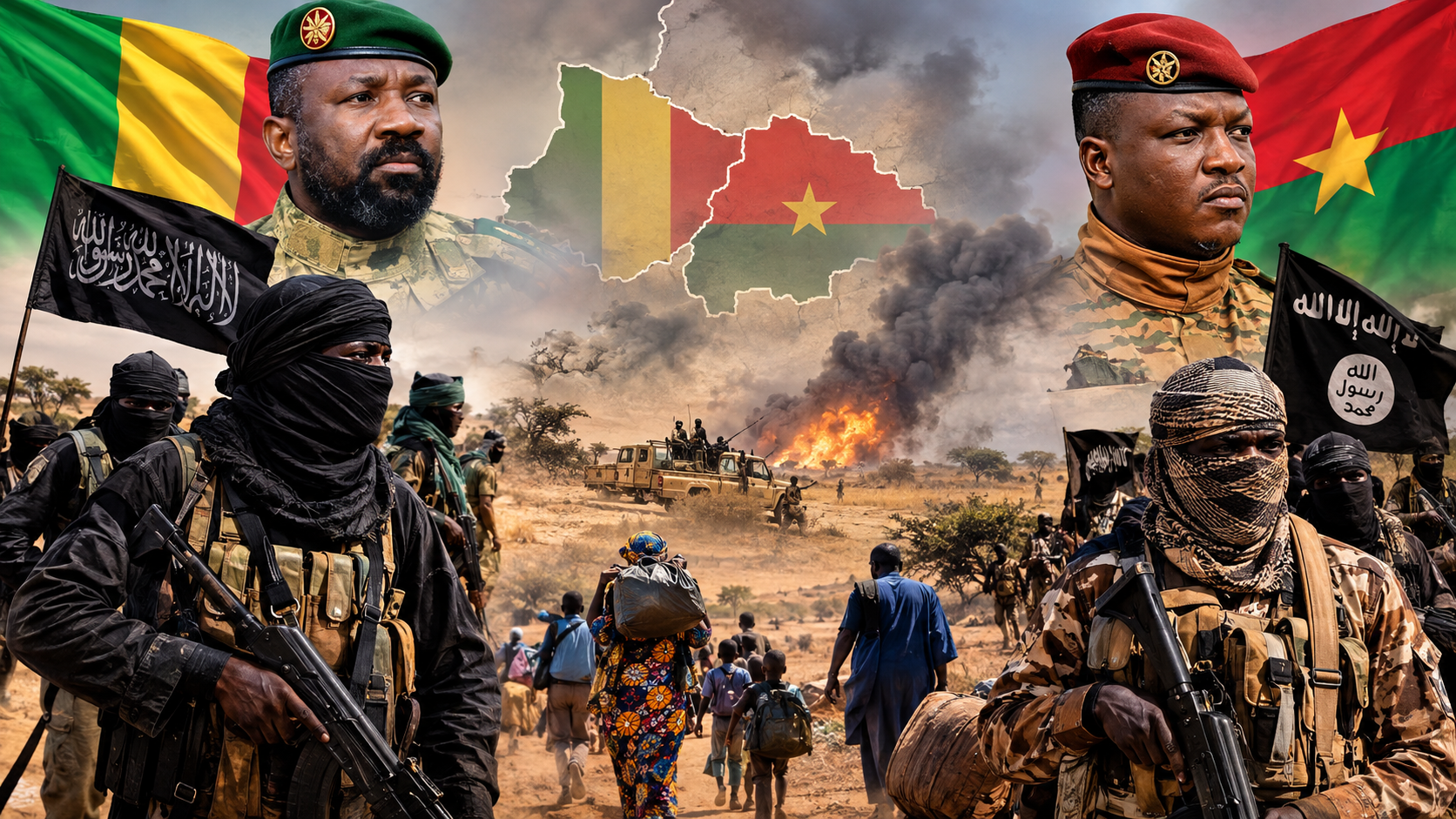
The escalating violent confrontations between the Group for the Support of Islam and Muslims (JNIM) and the Islamic State in the Sahel (EIS) at the Mali-Burkina Faso border have intensified scrutiny over the military juntas’ failure to restore stability in the region. These clashes underscore a broader crisis: armed groups now dictate terms across vast swathes of the Sahel, while national authorities struggle to regain meaningful control.
For the juntas in Mali and Burkina Faso, the promise of restoring security and reclaiming lost territories formed the cornerstone of their rise to power. Yet, years after their ascent, the jihadist threat remains unabated. Civilians in border areas continue to endure forced displacements, economic disruptions, and persistent insecurity, trapped in a cycle of violence that shows no sign of abating.
The shifting battleground of jihadist warfare
The recent surge in hostilities between JNIM and EIS marks a critical turning point in the Sahel’s conflict landscape. Unlike previous campaigns that primarily targeted state forces, these clashes reveal a growing rivalry between the two factions vying for territorial dominance. The competition extends beyond resource-rich zones to include major transit routes and local communities, which bear the brunt of the fighting.
In border regions like Sévaré, Djibo, and Ferkessédougou, the aftermath of these confrontations is stark. Villages lie abandoned, markets stand empty, and families flee with only what they can carry. The humanitarian toll is mounting, yet the juntas’ responses have so far proven insufficient to curb the tide of violence.
Military rhetoric vs. ground reality
The juntas of Mali and Burkina Faso have framed their leadership as a bulwark against jihadist expansion. However, the unrelenting clashes challenge this narrative. Despite repeated military operations, declarations of sovereignty, and assertions of territorial control, large areas remain lawless. The inability to curb inter-group violence raises pressing questions about the effectiveness of current strategies.
In Mali, led by Colonel Assimi Goïta, and Burkina Faso, under Captain Ibrahim Traoré, the discourse on security has been dominated by calls for self-reliance and military resolve. Yet, the persistence of jihadist activity suggests that force alone cannot resolve a crisis rooted in governance gaps, weak intelligence networks, and the absence of civilian protections.
The limits of hard power
While military operations have temporarily disrupted jihadist networks, they have failed to dismantle them permanently. The success of counterterrorism efforts depends on more than troop deployments; it requires sustained intelligence gathering, community engagement, and robust administrative presence. The absence of these elements leaves the door ajar for groups like JNIM and EIS to regroup and reassert their influence.
What lies ahead for Sahelian security?
The latest confrontations serve as a stark reminder that the jihadist threat is not monolithic. It thrives in the void left by weak governance, porous borders, and the erosion of public trust in state institutions. For the juntas, the challenge is twofold: to devise strategies that address both the symptoms and root causes of instability, and to deliver on their promise of security to populations weary of prolonged conflict.
As the cycle of violence continues, the international community watches closely. Yet, the primary responsibility rests with regional leaders to translate their military gains into lasting stability. Without decisive action to restore civilian safety and administrative control, the borderlands will remain battlegrounds, and the juntas’ credibility will continue to erode.
For now, the people of the Sahel find themselves caught between the ambitions of armed factions and the unfulfilled promises of their governments. The path forward demands more than declarations of intent it requires a reimagining of security that prioritizes the protection and participation of those most affected by the crisis.
By Ousmane Tandja — Journalist